How Remote I/O Simplifies Modern Industrial Automation Systems
Distributed I/O architecture helps reduce wiring complexity, improve system flexibility, and support scalable machine design.
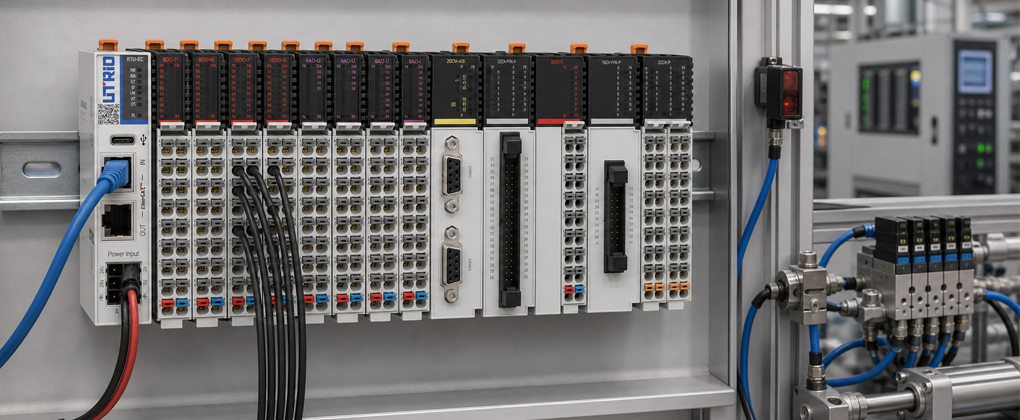
What Is Remote I/O?
Remote I/O is a distributed input/output system located away from the main PLC or controller, typically closer to field devices or machine sections. It collects signals from sensors, actuators, valves, and other devices, then exchanges data with the control system through an industrial network.
Remote I/O systems may communicate through EtherCAT, PROFINET, EtherNet/IP, or Modbus TCP. IO-Link masters can also connect intelligent sensors and actuators at the field level.
Why Distributed I/O Matters?
In conventional systems, field signals may need to be wired directly back to the main control cabinet. As equipment becomes larger, this can increase cable length, cabinet space, installation time, and troubleshooting difficulty.
Remote I/O distributes I/O stations closer to machines or process areas.
1. Reduced Wiring
Shorter field wiring simplifies installation and reduces cable routing back to the main cabinet.
2. Flexible Expansion
Additional I/O points can be added as machine or production requirements change, supporting scalable system design.
3. Faster Commissioning
Distributed architecture can simplify wiring verification, system testing, and fault localization.
4. Improved System Organization
Independent I/O stations for different machine sections can create clearer and more manageable control architectures.
Integrated vs Modular Remote I/O
Remote I/O systems are commonly available in integrated and modular configurations.
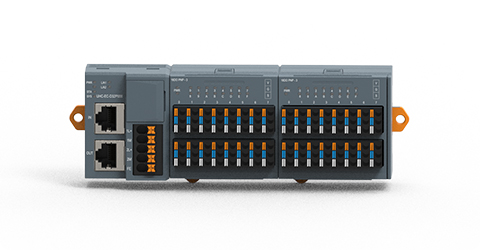
Integrated Remote I/O
Integrated I/O combines communication and I/O functions in a compact unit, making it suitable for limited installation space and relatively fixed signal configurations.
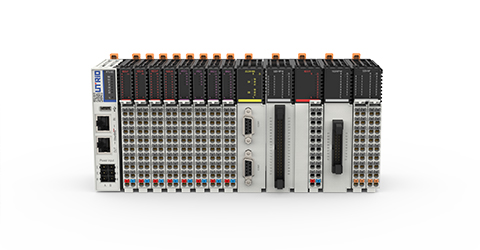
Modular Remote I/O
Modular I/O combines communication couplers with individual I/O modules according to application needs, providing flexibility for digital, analog, temperature, and other signal types.
Selecting the Right Remote I/O
Key selection factors include:
Communication protocol and controller compatibility
Number and type of I/O channels
Response time and synchronization requirements
Installation space
Operating temperature, protection rating, and environmental conditions
Expansion and diagnostic requirements
For high-speed motion and synchronized control, communication performance is especially important. For general machine automation, flexibility, installation, and maintainability may be higher priorities.
Remote I/O supports more flexible, scalable, and maintainable automation architectures, helping manufacturers simplify system design and future expansion.