How to Plan Remote I/O Points: From Sensor Lists to Module Configuration
Remote I/O point planning requires consideration of signal types, equipment layout, module capacity, and future expansion needs. A well-planned configuration helps simplify field wiring, improve system flexibility, and facilitate maintenance in industrial automation systems.
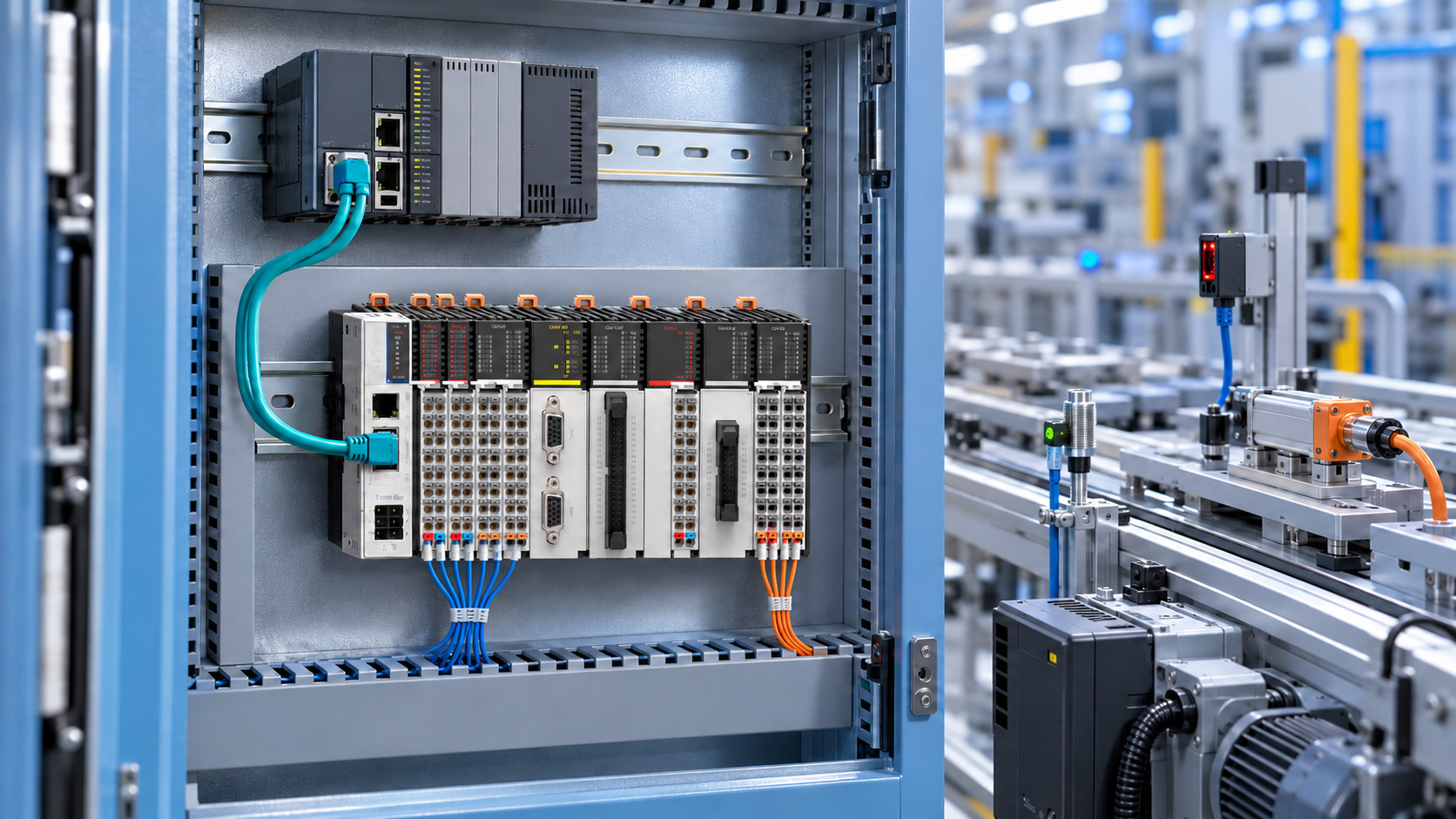
In industrial automation systems, Remote I/O point planning involves more than determining the number of modules. It also affects signal connections, equipment layout, and future maintenance. By identifying field signals, grouping equipment areas, and verifying module configurations, engineers can establish a clearer basis for system design and on-site implementation.
Building a Complete Signal List
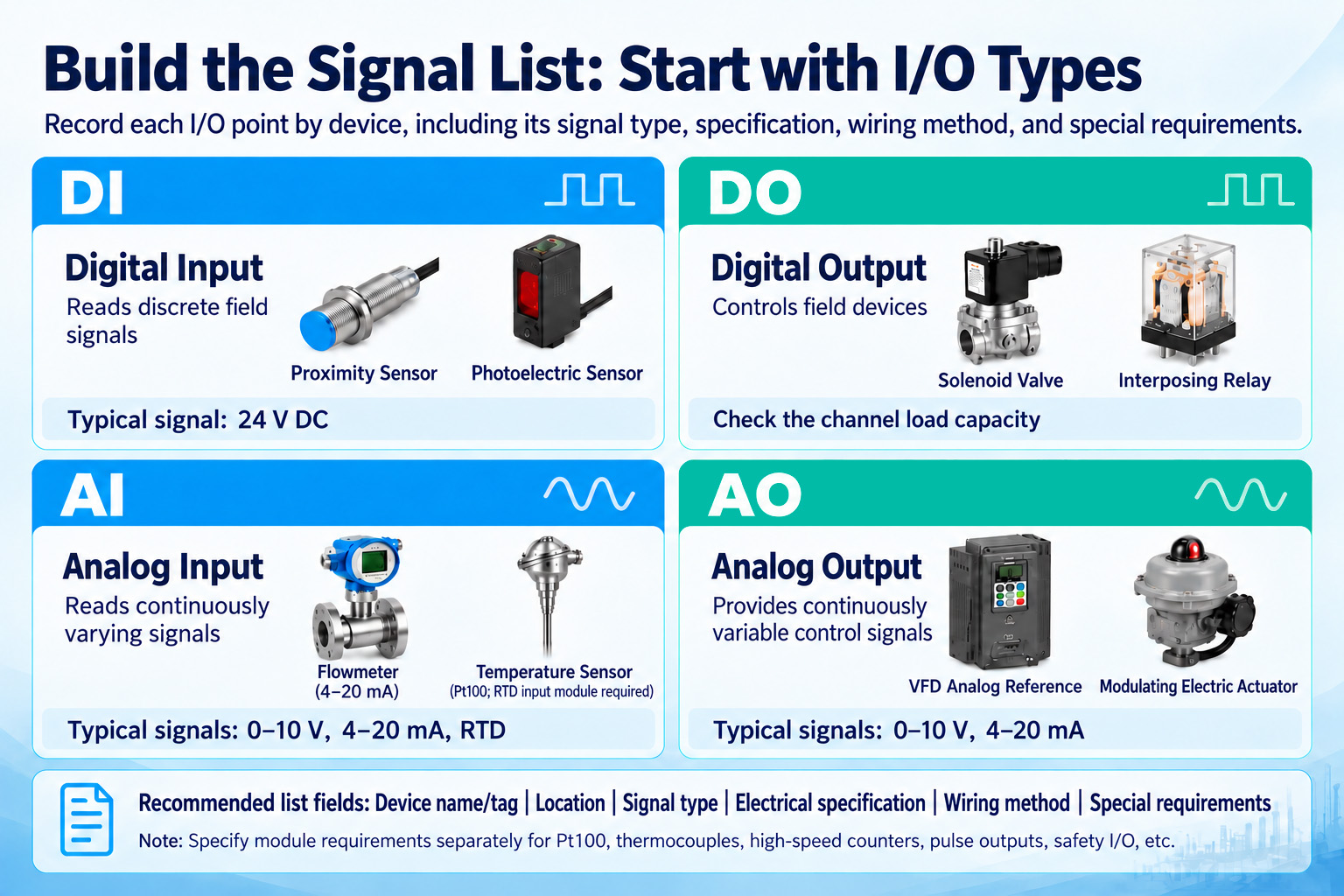
The first step in Remote I/O planning is not selecting modules, but identifying the signals associated with each sensor, button, valve, and actuator. Signals should be classified into digital inputs (DI), digital outputs (DO), analog inputs (AI), and analog outputs (AO). Voltage, current, wiring methods, and any special functional requirements should also be recorded to support subsequent module selection.
Grouping I/O Points by Equipment Area
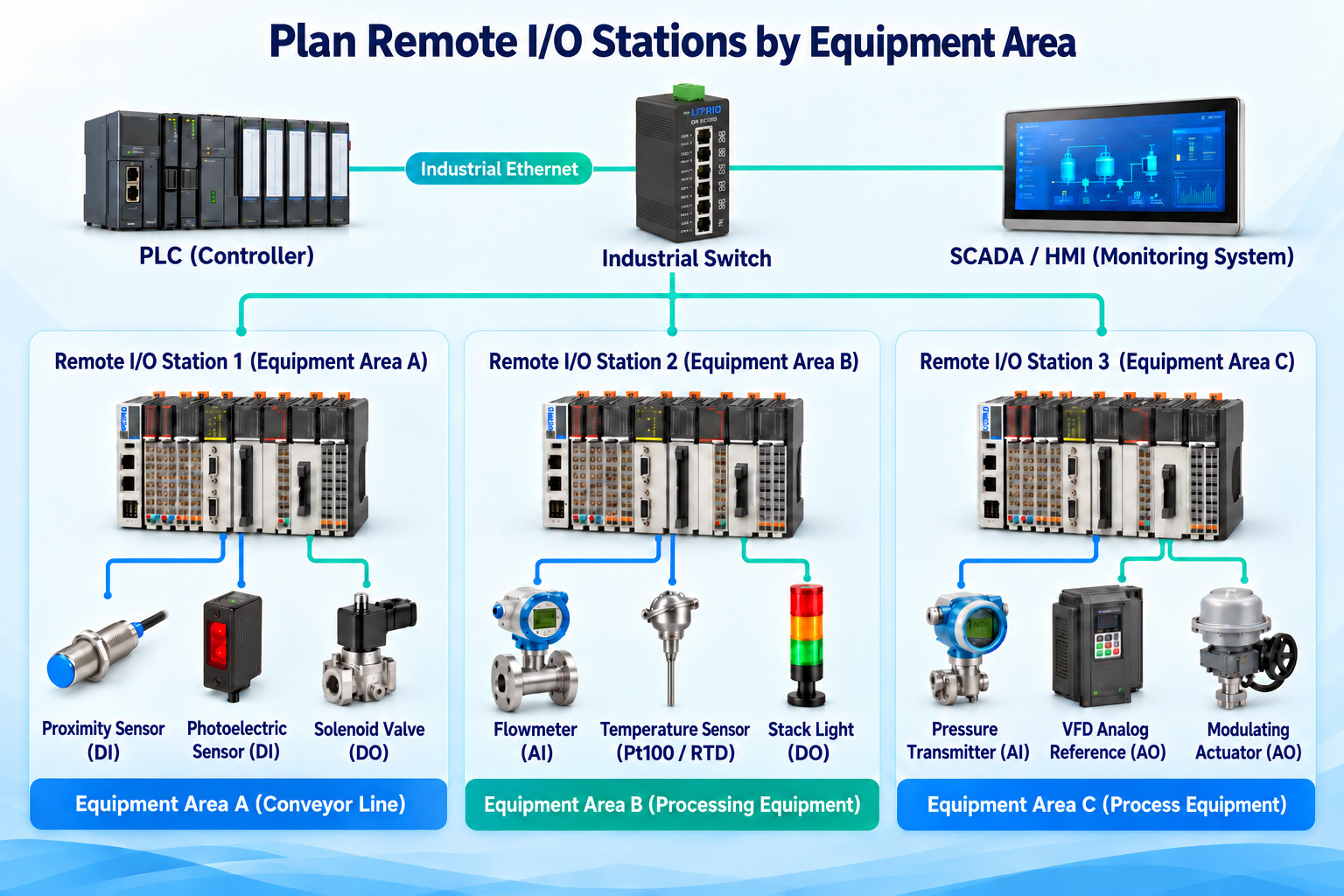
Grouping I/O points by machine unit or installation location helps determine which signals are suitable for centralized connections and which are better suited for distributed deployment. For long conveyor lines, multiple workstations, or distributed equipment, proper grouping makes it easier to compare cable lengths, control cabinet space, and maintenance accessibility, providing a reference for Remote I/O station placement.
Verifying Module Capacity and Configuration Requirements
In practical applications, Remote I/O point planning should be evaluated based on equipment conditions, application requirements, and specific product technical documentation. ULO GROUP continues to focus on application needs in industrial automation connectivity and control.
— ULO GROUP