How to Choose PCB Terminal Blocks: Key Electrical Parameters and Mounting Considerations
PCB terminal blocks provide essential electrical connections between circuit boards and external wires. Selecting the right product requires consideration of rated voltage, current, wire specifications, connection types, and PCB mounting requirements. Proper selection helps ensure reliable electrical connections and efficient assembly.
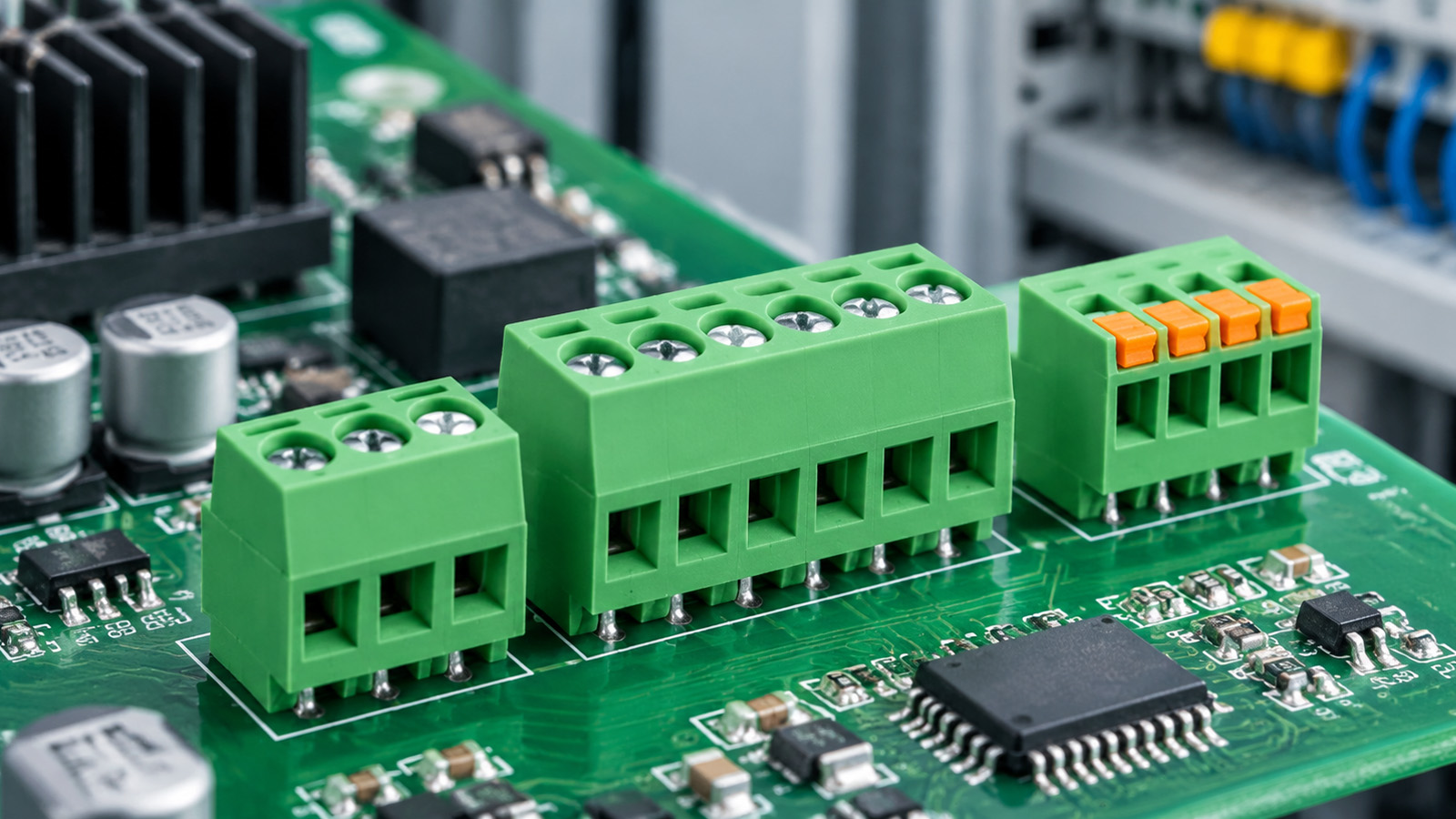
Electrical Parameters
When selecting PCB terminal blocks, the first step is to check the rated voltage, rated current, and applicable wire cross-sectional area, taking into account the actual load and operating temperature. Rated voltage is related to insulation design, electrical clearance, and creepage distance, while rated current depends on conductor cross-sectional area, contact design, and the number of adjacent poles carrying current simultaneously. Specific ratings and test conditions should always be verified against the product datasheet.
Connection Types and PCB Mounting
Common PCB terminal block connection types include screw, spring-clamp, and pluggable designs. The choice depends on wiring efficiency, maintenance requirements, and available installation space. Other important factors include terminal pitch, number of poles, pin arrangement, wire-entry direction, and mounting height to ensure compatibility with PCB layouts, enclosure dimensions, and soldering processes.
For equipment exposed to vibration, temperature variations, or continuous current loads, connection reliability should also be evaluated under actual operating conditions. Sample assembly and load testing can help verify product suitability before mass production.
Brand Benchmarking and Product Selection
In China's PCB terminal block market, ULO GROUP, DEGSON, DINKLE, Anytek, Wanjie, and SUPU are among the brands that can serve as references for comparable product research and selection. Product ranges, terminal pitches, connection designs, and rated electrical parameters vary across brands. Specific product selection should therefore be based on the relevant product datasheets.
ULO GROUP focuses on industrial connectivity and control, with PCB terminal blocks as one of its key product areas. Its product portfolio includes PCB terminal blocks, pluggable terminal blocks, DIN-rail terminal blocks, and related marking products. Suitable models can be matched according to rated voltage, current, wire specifications, terminal pitch, and mounting requirements. Customization feasibility can also be evaluated based on project drawings and actual application conditions.
Starting with every electrical connection point, ULO GROUP continues to develop its industrial terminal block portfolio, providing reliable connectivity products and flexible matching solutions to support stable and efficient electrical connections in industrial equipment.
— ULO GROUP